Paris doesn’t have legal brothels anymore, but the escort industry is still very much alive. It just operates in the shadows-where the law says one thing, and reality says another. If you’ve ever wondered why some ads disappear overnight, or why some agencies close without warning, the answer isn’t about demand or competition. It’s about politics. And the rules keep changing.
The Legal Gray Zone
In France, prostitution itself isn’t illegal. But almost everything around it is. You can’t advertise, you can’t work from a fixed location, you can’t be pimped, and you can’t solicit in public. That’s the law. But in practice, escort agencies in Paris still operate. They just call themselves ‘companion services,’ ‘private events,’ or ‘social introductions.’ The language is carefully chosen to avoid triggering the law, but the function hasn’t changed.
The 2016 law that criminalized clients-introduced under then-President François Hollande-was meant to protect sex workers. It made paying for sex a misdemeanor, punishable by fines up to €1,500. The idea was to reduce demand and push the industry underground, where workers would be safer. But the opposite happened. Workers lost their ability to screen clients safely. Many moved online, where anonymity is easier, but so is exploitation. Agencies that once had storefronts or phone lines now rely on encrypted apps and private websites. The clients? They’re still there. They just got better at hiding.
How Politics Controls the Narrative
Every time a new mayor takes office in Paris, the enforcement shifts. Some administrations crack down hard-raiding apartments, shutting down websites, arresting drivers who pick up clients. Others take a hands-off approach, focusing only on public nuisance or human trafficking. It’s not about public safety. It’s about optics. Politicians don’t want to be seen as ‘pro-prostitution,’ even if the reality is that banning it doesn’t make it disappear.
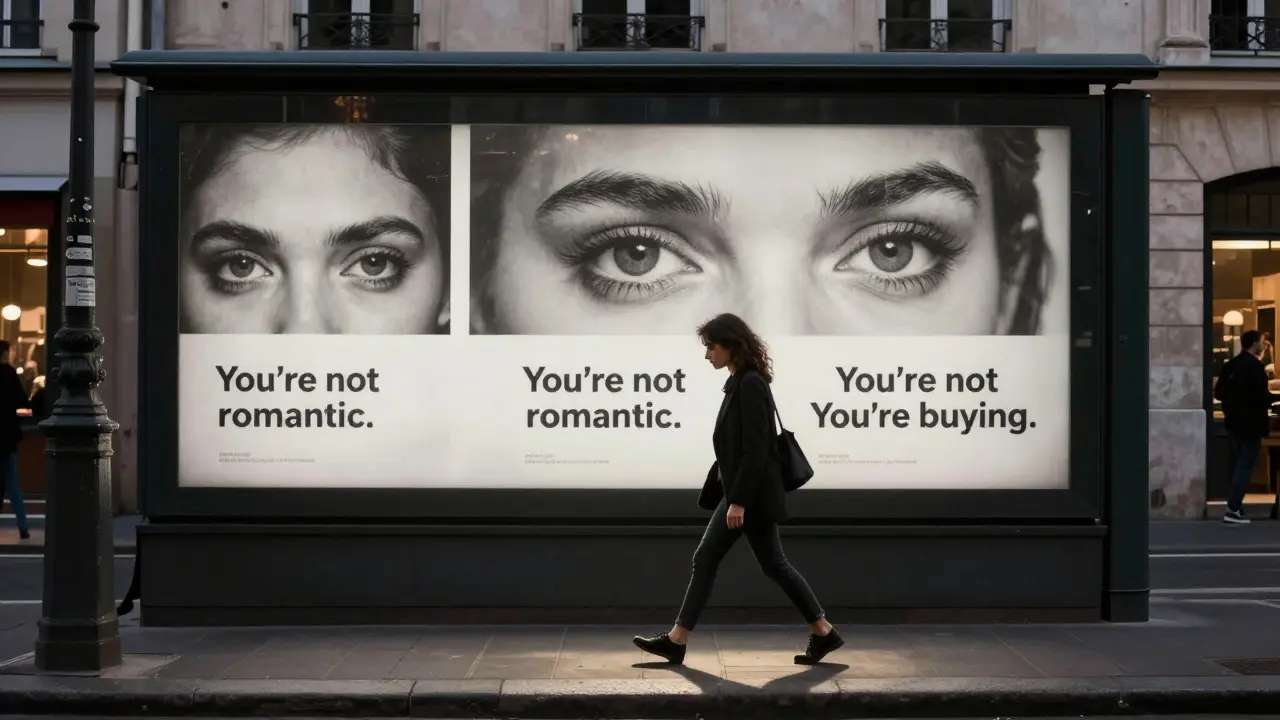
In 2023, the city launched a campaign called ‘Stop the Purchase,’ with billboards in tourist-heavy areas like Champs-Élysées and Montmartre. The ads showed women’s eyes with the tagline: ‘You’re not romantic. You’re buying.’ The campaign cost over €2 million. But according to a 2024 study by the French Institute of Public Opinion, 78% of sex workers in Paris said the campaign made their lives harder-fewer clients, less income, more fear of reporting violence.
Meanwhile, the same city government funds shelters and reintegration programs for those who want to leave the industry. But there’s a catch: these programs assume everyone wants out. Many don’t. For some, escorting is the only job that pays enough to support a child, pay rent in the 16th arrondissement, or send money home. When the state offers ‘help’ but doesn’t offer alternatives that pay the same, it’s not support-it’s punishment by neglect.
Regulations That Don’t Work
Paris has over 120 police units assigned to monitor nightlife and vice. Yet, the number of active escort workers hasn’t dropped since 2016. It’s grown. Why? Because the market adapts. When one platform gets shut down, another pops up. When a client gets fined, they switch to a new app. When an agency closes, the worker just starts freelancing.
Regulations target the wrong things. They punish the workers indirectly by making their work riskier. They don’t go after the real predators-the organized crime rings that control trafficking, fake agencies, or the payment processors that handle transactions for illegal services. Instead, they raid small, independent workers who are barely scraping by.
Take the case of a woman in the 15th arrondissement. She worked alone, booked through a private Telegram channel, charged €120 an hour, and paid her own taxes. In 2024, she was arrested after a client reported her. The police didn’t charge her with prostitution-they charged her with ‘organized exploitation,’ because she used a website that also listed other workers. She had no connection to them. But the law doesn’t care about intent. It cares about association.
Who Really Benefits?
The biggest winners in this system aren’t the workers, not the clients, and certainly not the politicians. They’re the tech platforms. Companies like Telegram, Discord, and even dating apps like Bumble and Tinder have become the new brothels. They don’t host ads, but they don’t stop them either. They make money from subscriptions, data, and ads-while claiming they’re just ‘connectivity tools.’
Meanwhile, the workers pay the price. No health checks. No legal protection. No way to report abuse without risking arrest. In 2023, a survey by the Paris-based NGO La Maison des Femmes found that 61% of escort workers had experienced violence in the past year. Only 12% reported it to police. Why? Because they feared being arrested themselves.
Even the word ‘escort’ is weaponized. In legal documents, it’s often grouped with trafficking. In media, it’s sensationalized. In public discourse, it’s reduced to a moral issue. But for the people doing the work, it’s about survival. It’s about paying for childcare, medical bills, or a studio apartment in a city where rent has jumped 40% since 2020.
What’s Changing in 2025?
There are signs the tide might be turning. In early 2025, a group of 14 former sex workers and activists filed a lawsuit against the French state, arguing that the 2016 law violates human rights by forcing workers into dangerous conditions. The case is being reviewed by the European Court of Human Rights.
Some city council members in Paris are quietly pushing for decriminalization-not legalization. They want to remove penalties for workers and clients, but keep laws against coercion, trafficking, and exploitation. It’s a model used in New Zealand and parts of Australia, where sex work is treated like any other job. Workers can form unions. They can report abuse. They can get health services without fear.
It’s not popular. But it’s practical. And it’s starting to gain traction. In June 2025, a pilot program launched in the 18th arrondissement offered free legal advice and health screenings to sex workers who registered voluntarily. Over 300 people signed up in the first month. Not because they wanted to quit. Because they wanted to be safe.

The Real Cost of Ignoring Reality
Politics and regulations haven’t ended the escort industry in Paris. They’ve just made it more dangerous, more invisible, and more profitable for those who control the edges. The workers aren’t the problem. The system is.
If you want to understand why the industry persists, stop looking at the ads. Look at the rent prices. Look at the wage gap. Look at the lack of affordable housing. Look at the fact that a single mother working as a barista in Paris earns less than €1,800 a month after taxes-and that’s with two jobs.
Sex work isn’t the cause of the problem. It’s a symptom. And until politics starts addressing the real issues-poverty, inequality, lack of support-no law will change the outcome. The workers will keep working. The clients will keep paying. And the politicians will keep pretending they’re solving it.
What This Means for You
If you’re a client, know the risks. You’re not just paying for a service-you’re paying into a system that puts workers in danger. If you’re a worker, know your rights-even if the law doesn’t recognize them, you still have the right to safety. Reach out to groups like La Maison des Femmes or Prostitution and Human Rights for support.
If you’re just curious, understand this: the escort industry in Paris isn’t about sex. It’s about survival. And until the rules change to reflect that, nothing will truly improve.